

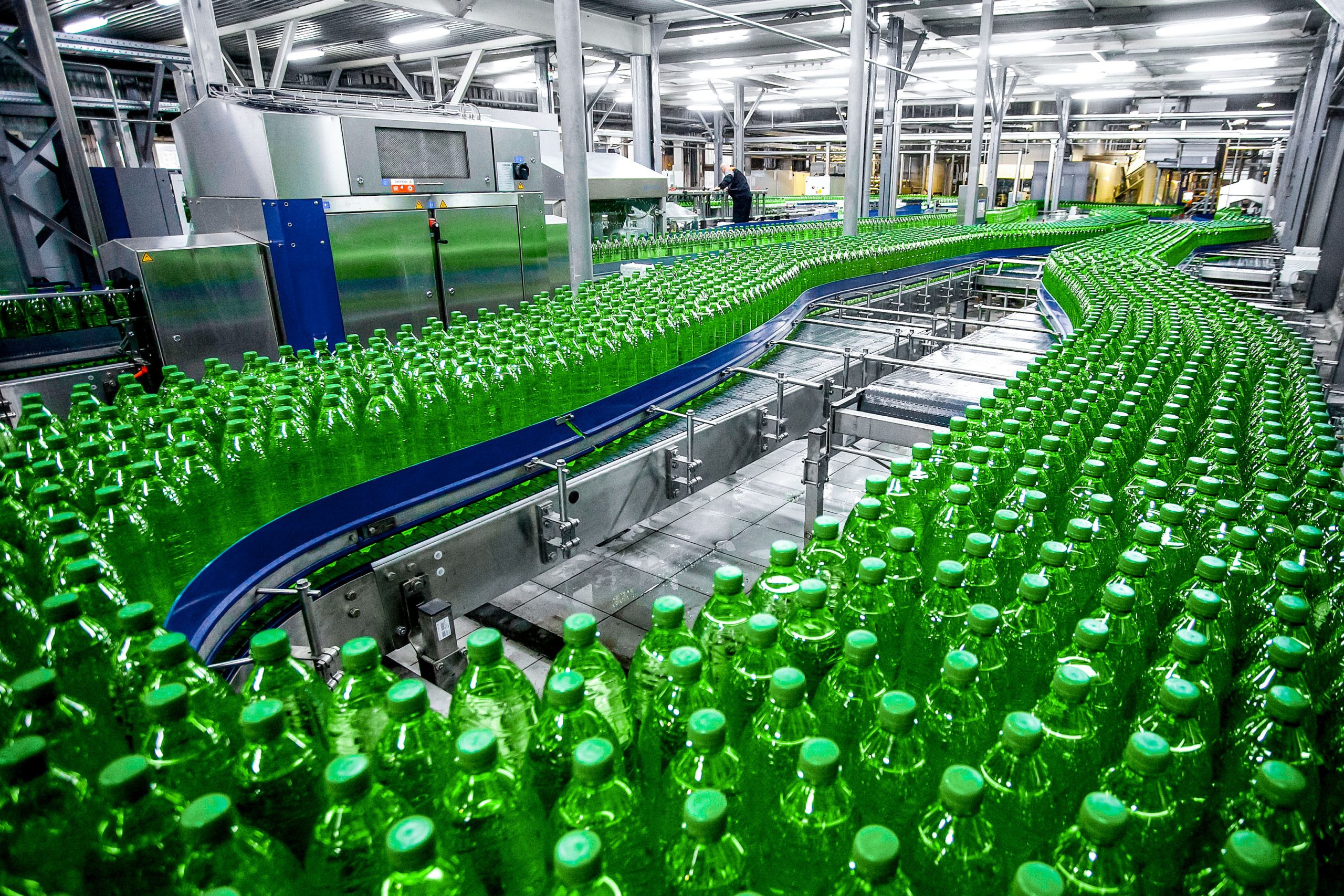
LimeBook in the Food Industry.
The food industry operates within one of the most highly regulated environments across all manufacturing sectors. Food safety, cold chain continuity, production hygiene, and raw material traceability are not optional — they are legal requirements enforced by sanitary inspections, auditors, and increasingly demanding retail customers.
Food production plants receive dozens of deliveries from raw material and packaging suppliers every day, manage service and sanitation companies entering production areas that require special hygiene procedures, and at the same time handle large numbers of temporary workers — especially in industries with seasonal production peaks. Every person entering the production floor must understand and follow GMP procedures, and any deviation from standards may result in line stoppages, customer complaints, or — in the worst-case scenario — a product recall.
In addition, the working environment itself presents unique challenges: humidity, low temperatures, slippery surfaces, and the use of sharp tools create an increased risk of accidents. HACCP inspections, supplier audits, infrastructure checks, and facility reviews are repetitive and documentation-intensive processes — and managing them using paper forms or spreadsheets creates a real risk of gaps that often become visible at the worst possible moment.
LimeBook addresses the specific needs of the food industry through the digitalization of processes that are particularly critical in this sector: access control and training management for everyone entering production areas, electronic permit-to-work workflows for maintenance activities in hygiene-sensitive zones, digital checklists, direct incident reporting from the production floor, and compliance management for raw material suppliers and external contractors.
LimeBook REJ
Visitor Management System
A system for controlling and registering the entry of all external personnel into the plant — including suppliers, service technicians, auditors, and visitors.
Benefit: A food production plant must know at all times who is present within the production facility — both for food safety reasons and to meet audit requirements. LimeBook REJ digitalizes this process: visit pre-registration, automatic QR-code e-passes, host notifications upon arrival, and real-time attendance monitoring replace the traditional paper visitor logbook. An evacuation list covering everyone currently on-site can be generated with a single click. Contractor evaluations provide structured data for managing the database of service suppliers.
LimeBook SZK
Learning Management Application
A module for managing induction and periodic training for external workers, service companies, and suppliers entering production areas.
Benefit: In the food industry, every person entering the production floor must complete training on hygiene and food safety principles — regardless of whether they are a temporary worker, a refrigeration service technician, or a packaging supplier representative. LimeBook SZK enables this training to be completed remotely before arrival, with confirmation of completion and automatic access blocking for untrained individuals. The system monitors training validity and sends renewal reminders.
LimeBook POZ
Permit-to-work workflow.
Electronic creation and management of permits for maintenance and technical work carried out in production and hygiene-sensitive areas of the plant.
Benefit: Maintenance work on production machinery, refrigeration installations, or CIP systems in a food production plant requires strict control — any intervention in a production area carries a risk of contamination. LimeBook POZ enforces procedural completeness before a service technician enters the area, including hygiene checklists, LOTO procedures, and confirmation of cleaning after work completion. Multi-stage approval workflows with notifications reduce authorization time for planned maintenance work, while the complete permit history remains readily available during BRC audits or sanitary inspections.
LimeBook ACL
Audits and inspections.
A module for planning and conducting HACCP inspections, GMP audits, hygiene controls, and infrastructure reviews using digital checklists.
Benefit: It replaces paper-based inspection forms with a tool that operates on tablets or smartphones directly at the production line or inside cold storage areas. Inspectors can document non-conformities with photos, while the system automatically generates corrective actions and assigns them to responsible individuals with defined deadlines. A compliance scoring calculator provides measurable results for internal audits required by auditors. Schedules and automatic notifications eliminate the risk of missing mandatory inspections of critical control points.
LimeBook SNR
Near-miss incident reporting.
A module for rapid reporting of hazards and potential incidents directly from the production floor.
Benefit: The environment of a food production plant — wet floors, low temperatures, work with sharp tools, and pressurized equipment — creates a high risk of accidents. A simple mobile form lowers the barrier to hazard reporting and encourages employees to actively participate in improving safety. Automatic assignment of responsibilities and initiation of corrective actions reduce response times, while trend analytics help eliminate recurring sources of risk before an accident occurs.
LimeBook SAR
Accident registration.
A module for documenting workplace accidents, including support for incident reports, witness statements, and root cause analysis.
Benefit: A standardized accident reporting form with photographic documentation, voice notes, and witness statements ensures complete documentation from the very first minutes after the incident. Built-in 5 Why analysis and an immediate action checklist structure the post-incident investigation process and provide ready-to-use documentation for labor inspectors and insurers. The accident archive provides data for trend analysis required by safety standards and occupational health and safety management systems.
LimeBook CEM
Compliance Evaluation Module
A module for managing the full supplier lifecycle — from qualification, through certificate and documentation monitoring, to performance evaluation.
Benefit: Branża spożywcza wymaga szczególnie rygorystycznej kwalifikacji dostawców surowców, opakowań i firm świadczących usługi na terenie zakładu — w tym certyfikatów sanitarnych, atestów higienicznych, polis ubezpieczeniowych oraz dokumentacji dopuszczającej do kontaktu z żywnością. LimeBook CEM centralizuje całą tę dokumentację, automatycznie alarmuje o wygasających certyfikatach i blokuje współpracę z podmiotami niespełniającymi wymagań. System dostarcza gotową dokumentację kwalifikacji dostawców na potrzeby audytów i kontroli — skracając czas przygotowania z dni do minut.
LimeBook BBS
Behavioral observations.
A module for conducting systematic observations of employee behavior in the production environment, supporting the development of a safety and hygiene culture.
Benefit: In food production plants, behavioral observations concern not only physical safety, but also compliance with hygiene standards — including hand washing, the use of protective clothing, and proper behavior in hygiene-sensitive areas. LimeBook BBS enables systematic observations using a mobile device, structured employee feedback, and trend analysis of behaviors. AI-supported feedback generation improves the quality of conversations and accelerates the development of a culture focused on compliance with hygiene procedures.
How to implement LimeBook in your industry?
Contact us. We will create a working group to define the scope of implementation. Together, we will identify the areas of digitization and automation that will deliver tangible business benefits to your organization.